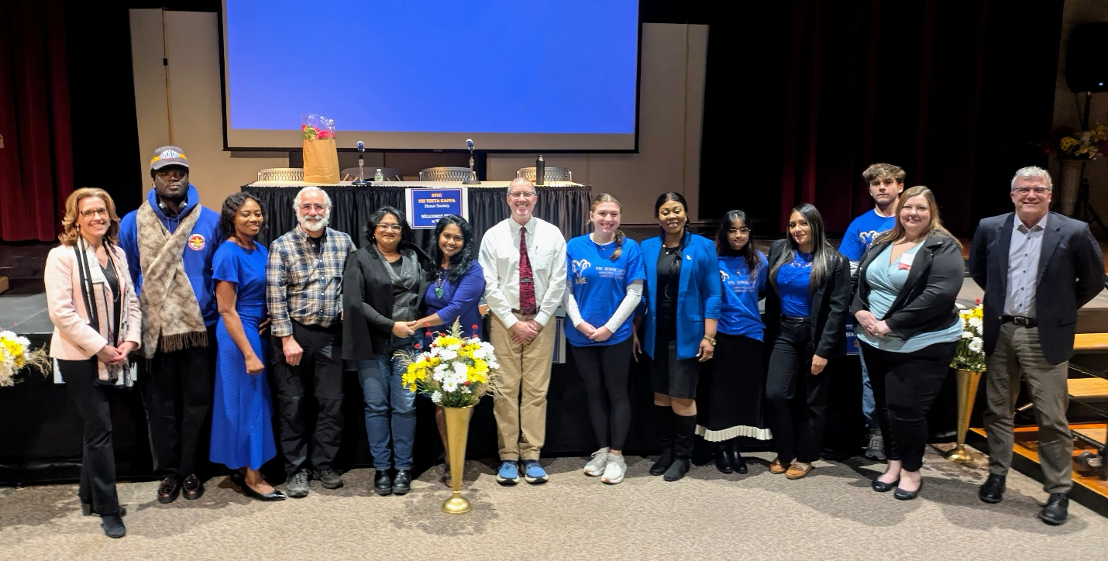
Submitted by Sean Rooney, an STCC student and provisional member of Phi Theta Kappa
Hello, my name is Sean Rooney. I’m a first-year student here at STCC and a proud provisional member of the Phi Theta Kappa Honors Society. Like many students just beginning their college education, I’m still exploring which major will become my path, but I already know I made the right choice by coming to STCC. It is transforming my educational journey. The college’s affordable tuition, diverse academic programs, strong transfer and career pathways, and its truly supportive campus community creates an environment where students can discover who they want to become.
Just before Thanksgiving, our Phi Theta Kappa Honor Society (PTK) hosted a panel discussion on Environmental Sustainability as part of our Honors in Action project. Environmental sustainability means using our natural resources responsibly to meet today’s needs while protecting them for future generations. This panel simply exceeded my expectations. First, the auditorium was jam packed, and so many students stood along the walls that it felt as though the whole community had shown up ready to learn. The presentations were outstanding, packed with information that I was unaware of, which inspired and motivated me to learn more.
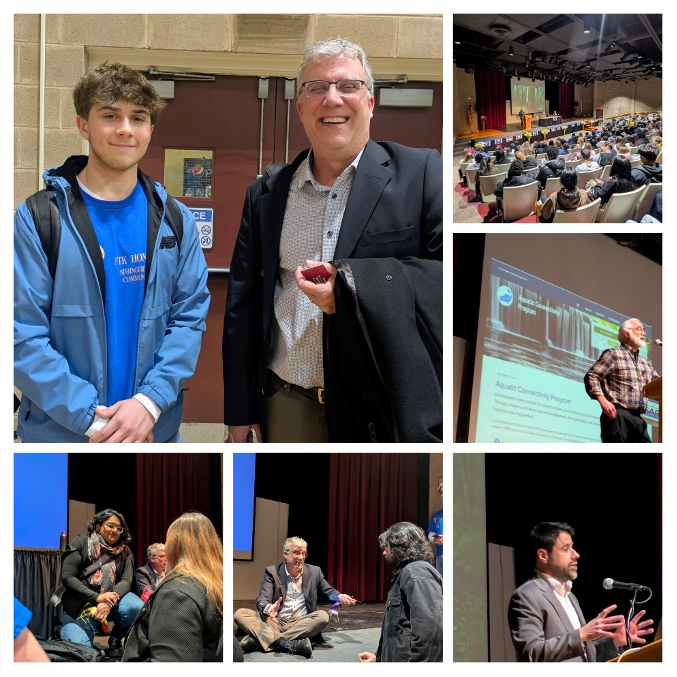
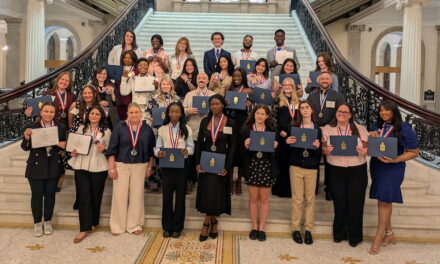
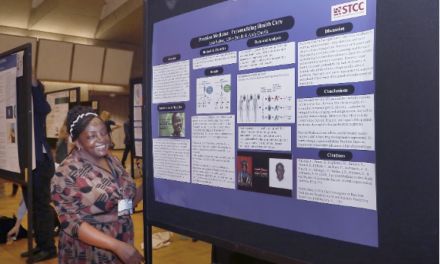
Our PTK chapter president, Eunice Addae-Wusu, opened the event with a warm greeting, followed by an enthusiastic welcome from Dr. Christopher Thuot. Dr. Timothy Randhir of UMass facilitated the discussion, and we were honored to have Councilor Jesse Lederman in attendance as well, who presented trophies to PTK members for their excellence in community service and students for their impressive class research projects, adding a celebratory note.
The heart of the event was our distinguished speakers who were UMass Amherst professors. Dr. Scott Jackson spoke about Wildlife Conservation, Dr. Charles Schweik about Environmental Policy, Dr. Trisha L. Andrew on Wearable Electronics and Dr. Timothy Randhir about Watershed Management & Water Quality. Each speaker shared their research, current sustainability challenges, and the importance of environmental sustainability.
Dr. Scott Jackson spoke about the importance of conserving wildlife habitats and maintaining ecological connectivity, explaining how thoughtful planning can protect biodiversity. Dr. Charles Schweik explained how effective environmental policy, paired with collaborative governance, shapes the way we manage natural resources. His emphasis on data, technology, and public involvement showed how sustainability is both a scientific and a civic responsibility. Dr. Trisha L. Andrew shared her work on wearable electronics and smart textiles. Her innovations demonstrated how technologies can reduce waste and even help monitor environmental conditions. Finally, Dr. Timothy Randhir explained the essential role of watershed health in long-term sustainability, showing how land-use planning and water-quality models can protect fragile ecosystems. What struck me most was how seamlessly their perspectives connected. Science, policy, technology, and community engagement each play a crucial role for the united cause of Environmental Sustainability.
After the panel, I had the privilege of interviewing Professor Schweik and speaking with him further. His presentation on “scaling wide and fast” in environmental conservation and climate action left a deep impression on me. He stressed the urgency of addressing climate change now and introduced the concept of open-source innovations sharing ideas freely for the good of the planet, rather than keeping them locked away. According to Professor Schweik’s research, open-source collaboration accelerates global progress. One of his examples came from right here in Springfield: in the 1820s, the Springfield Armory openly shared its equipment designs, helping the United States leap ahead in manufacturing during the early Industrial Revolution. He spoke about a Springfield nonprofit called WellSpring Cooperative, showing how local efforts can model global solutions. Walking out of the Auditorium that day, I felt inspired not only by what I learned, but by the sense of community and possibility in the room. Events like this remind me that while I may still be deciding on my major, I’m already exactly where I need to be. At STCC, I’m surrounded by people who care, my PTK colleagues who volunteer and serve, and people who are willing to share their knowledge to make our world better. Thank you.