Submitted by Viran Patel, a PTK student at STCC.
Hello, my name is Viran Patel. I am pursuing a degree in Radiology Technology. My passion is to become part of a healthcare team, providing essential diagnostic information through precise and compassionate patient care. I find the intersection of technology and direct patient interaction incredibly fulfilling. As part of our Honors in Action project on Environmental Sustainability our Phi Theta Kappa Honor Society visited the Quabbin reservoir in Belchertown to study Water Sustainability. Responsible management of our freshwater resources to provide for our current and future generations is crucial since it underpins life, ecosystems, agriculture, and community health.
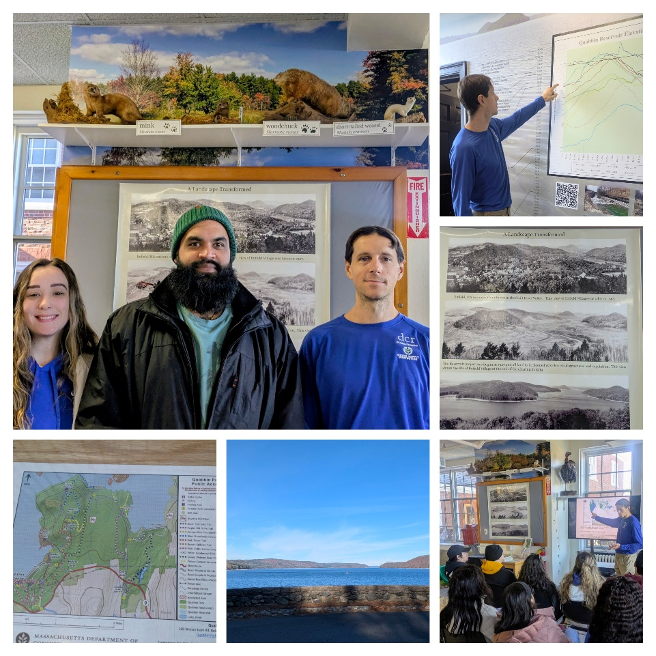
As I pulled into the parking lot at the Quabbin Reservoir, the serene silence hit me like a physical force. No highway hum, no airplanes overhead, only wind moving through pines and the occasional cry of a loon. In that moment I understood why people call this endless stretch of blue waters sacred. We were welcomed by Justin Gonsor, the Program Coordinator. He showed us a video documentary about the history and building of this reservoir. He shared that between 1930 and 1939, four entire towns; Dana, Enfield, Greenwich, and Prescott, were flooded to build the Windsor dam that holds 412 billion gallons of water so that Boston, sixty-five miles away, could drink! People lost their homes, cemeteries were relocated, roads, churches, schools, and mills were all gone. On April 28, 1938, the Commonwealth of Massachusetts officially disincorporated the four towns. They ceased to exist on paper the way they had already ceased to exist on the ground.
The water from the Quabbin flows by gravity through the 25 mile Quabbin Aqueduct into the Wachusett Reservoir and then continues toward Boston through a network of underground tunnels. It stays clean because the surrounding watershed is strictly protected and the water is naturally filtered through forests and wetlands. The Massachusetts Water Resources Authority uses disinfection methods like ozone and UV light rather than heavy filtration to keep the water safe and high-quality.
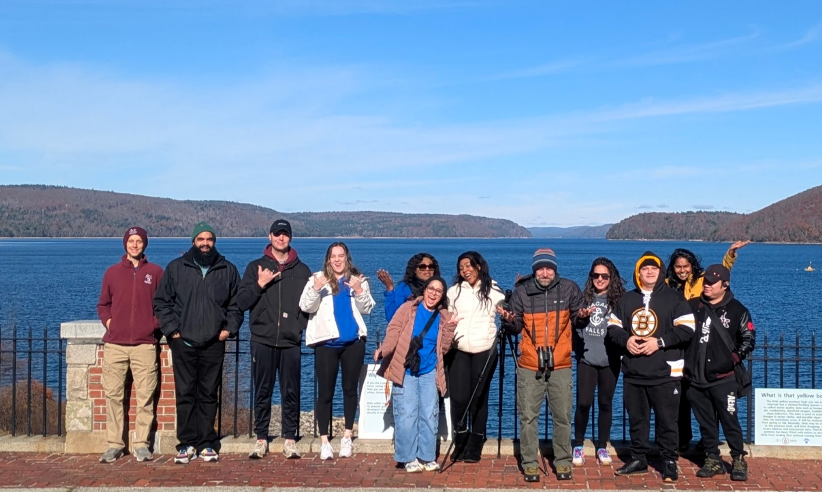
The Quabbin is beautiful in the way cathedrals are beautiful and awe-inspiring. It is an engineering marvel and since the state protects all the land around it, the water is clean and the area rich in wildlife including bald eagles, loons, moose, black bears, beavers, and a wide variety of other birds. As I walked the path to Enfield lookout the view was staggering. The interpretive sign is polite, almost clinical. It tells you the reservoir is one of the largest unfiltered water supplies in the country. It does not tell you about the last dance held in Enfield’s town hall in 1938, or the woman who refused to leave her home until workers carried her out, or the man who returned years later to scatter his wife’s ashes over the water that covered her garden.
I departed with a deeper sense of quiet than when I arrived. The reservoir has that effect on you. It offers beauty on one hand and a handful of ashes on the other. A reminder of the human cost behind environmental decisions and the responsibility we carry in caring for what was sacrificed. As the light faded across the water, I felt the distant call of a hope across the expanse of submerged memories that encapsulates the sound of Massachusetts recalling its past, sustaining itself, and inviting you to do the same.