(Blog submitted by Janelle Miller)
Can a simple garlic bulb reveal the connection between human and planetary health
Hello, my name is Janelle Miller, and I am a Health Sciences student pursuing a career as a radiology technician. I am also an active member of the Phi Theta Kappa Honor Society at STCC, which gives me opportunities to turn my academic achievements into leadership, fellowship and community service.
I have always loved gardening, so when I heard about a volunteer opportunity to help harvest garlic, I immediately signed up.
I arrived expecting to simply help with a harvest, but the morning quickly became a lesson in the United Nations’ One Health concept: the understanding that human health is inseparable from the health of plants, animals and our shared environment.
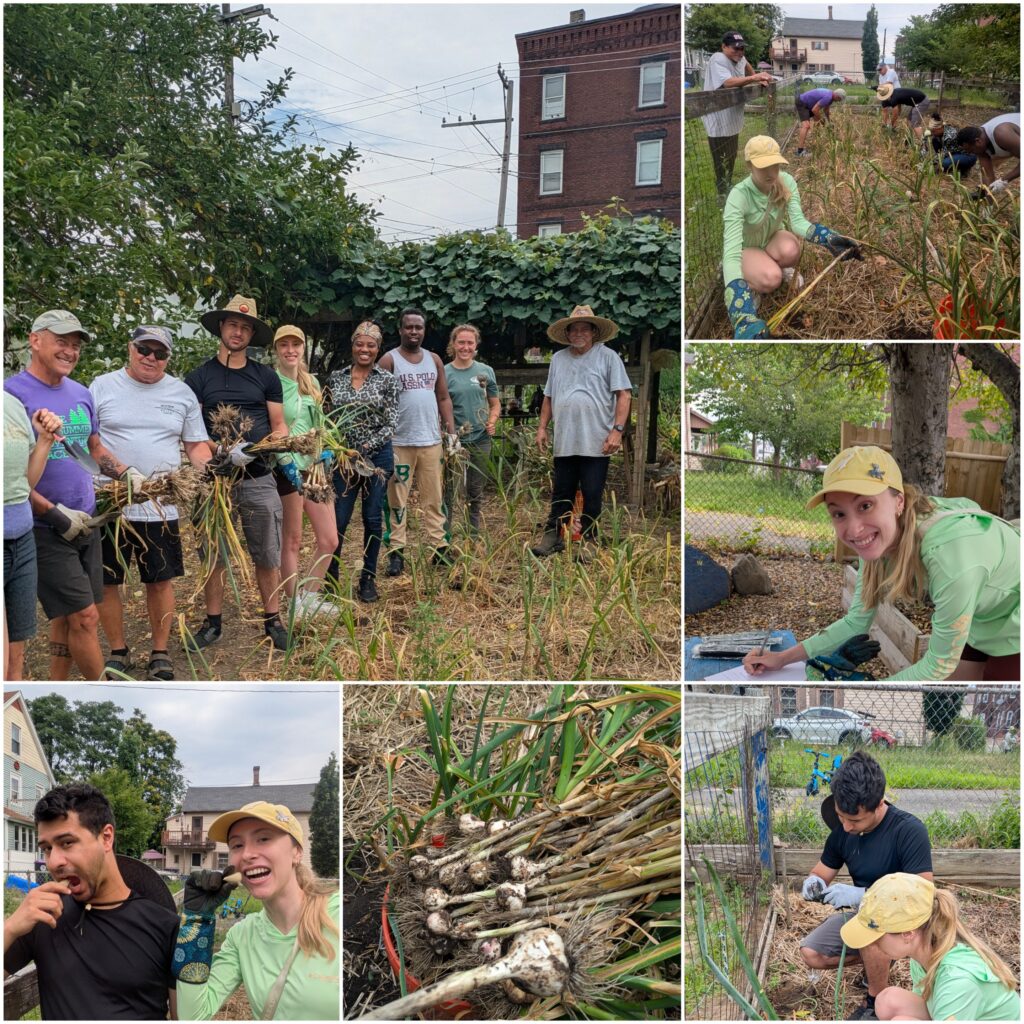
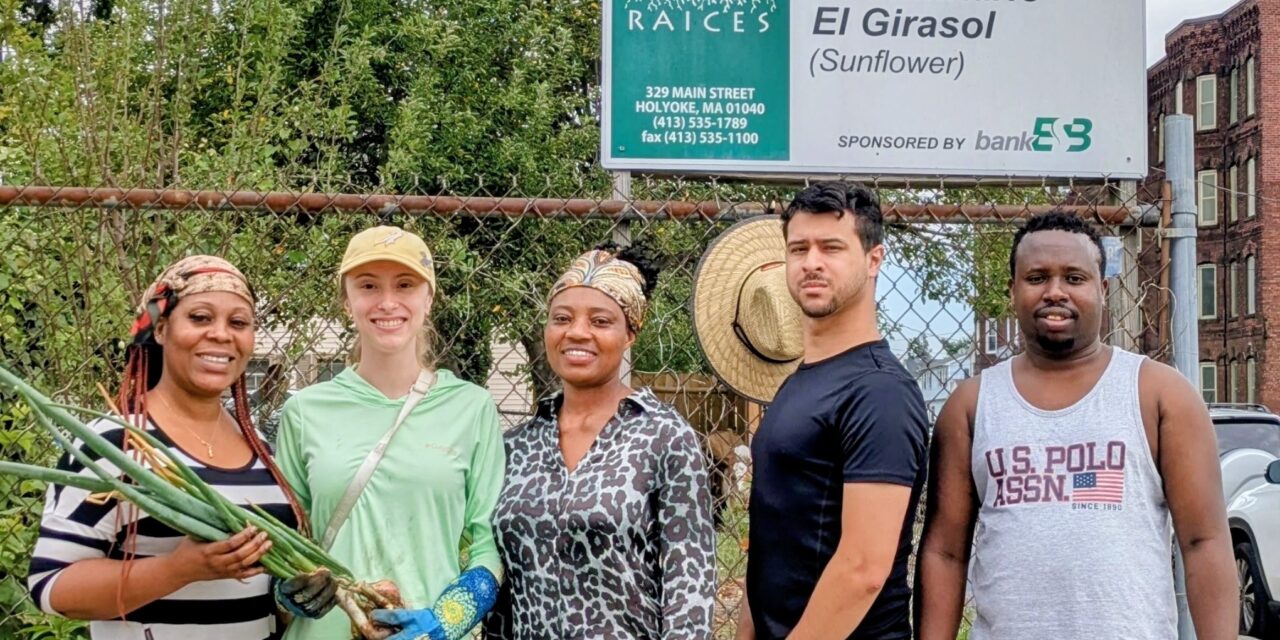
Our PTK team—including Eunice, Emelia, Innocent, William and me—gathered at Jardín Comunitario El Girasol in Holyoke to volunteer. We were warmly welcomed by our host, Nadia Kamel, coordinator at Nuestras Raíces. This organization plays a vital role in promoting food security through community gardens that provide access to fresh, organic food while preserving Latino agricultural traditions and protecting environmental health.
Under the shade of an apple tree, Nadia asked our team to harvest garlic that had been planted the previous November by some of our members. After pulling on our garden gloves, we got right to work.
As each bulb emerged from the soil, I felt a burst of excitement and joy. I began to realize this was more than a gardening task. It was the final chapter of an eight-month journey that had begun the previous fall. The compost had provided nutrients, straw mulch had conserved moisture while suppressing weeds, soil microbes had broken down organic matter to release nutrients and support healthy roots, rain and sunlight had sustained the plants, and volunteers had returned to complete the harvest.
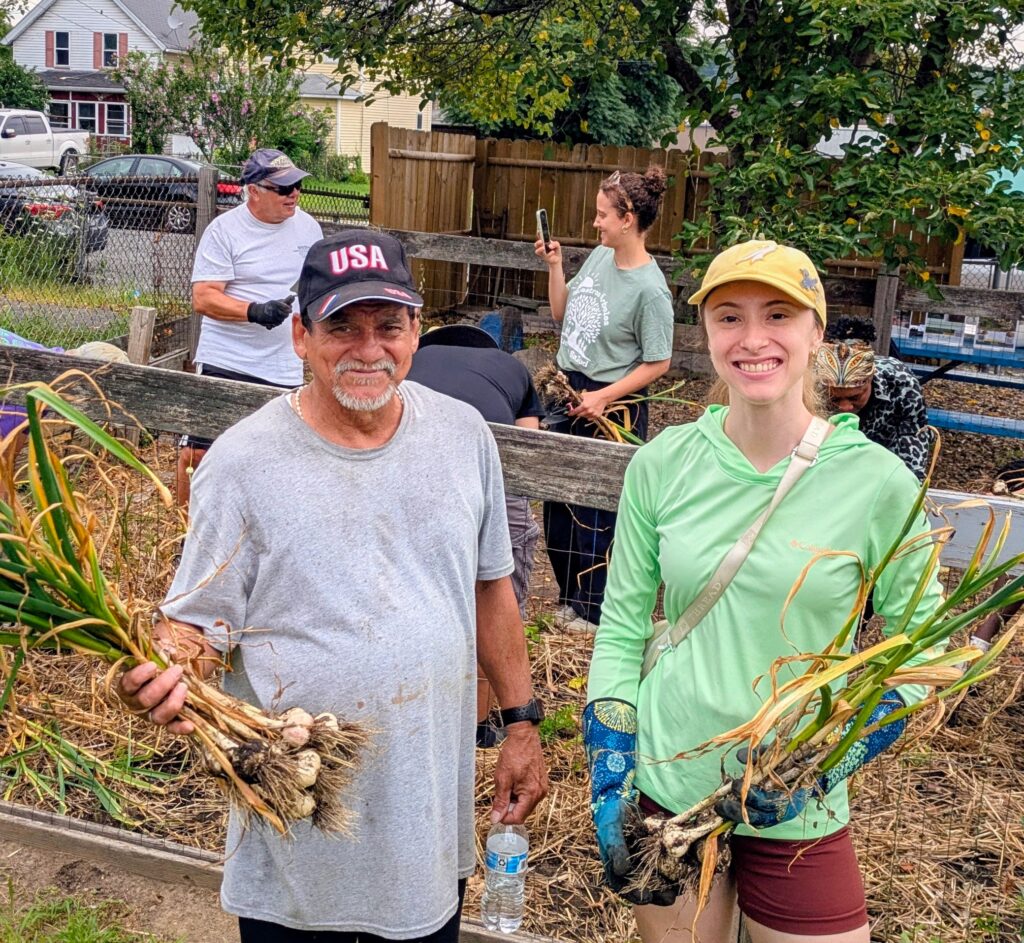
It was a simple yet timeless lesson in growth—from one clove to an entire bulb.
Garlic is a staple in cuisines around the world, but it also plays an important role in both human and garden health. It contains sulfur compounds, including allicin, which has antimicrobial, anti-inflammatory, antiviral and antioxidant properties. It is also rich in vitamins.
I also learned that this remarkable bulb serves as a form of Integrated Pest Management (IPM) in the garden. This scientific approach manages pests and diseases by combining prevention, monitoring, biological controls and physical methods. By reducing the need for chemicals, IPM helps protect people, beneficial organisms and the environment.
We were joined by Luis, an avid gardener and caretaker of the community sunflower garden. He shared how he first discovered gardening in New York City, where community gardens thrive in small, enclosed spaces that fit the fast-paced urban landscape.
We were also joined by Gabbi Perry, who works for Neighbor to Neighbor in Holyoke and shares the same mission of strengthening communities through gardening. Listening to their experiences transformed the harvest into a story of knowledge being passed from one gardener to another and from one city to another.
One Health is not achieved by scientists or health professionals alone. It grows through collaboration among residents, gardeners, educators, organizations and volunteers.
At the end of our successful harvest, we all recognized the power of volunteering in our community. I had come to pull garlic, but I left with a much deeper understanding of a profound truth: the message of One Health—that all life on Earth is interconnected.
Rachel Carson captured this idea perfectly when she wrote, “In nature, nothing exists alone.”
As I prepare for a career in health care, this experience reinforced my belief that human health depends on the health of our environment. Caring for people also means caring for the ecosystems that sustain us all.