Submitted by STCC PTK student Esias Valentin
Saludos! My name is Esias Valentin. I am a Biology major with a strong interest in pursuing a future career in medicine. I have always been surrounded by plants and home-grown vegetables, and growing food has been a big part of how my mother and I bonded when I was younger. Little did I know then that I was planting more than seeds. I was also nurturing a deep appreciation for the age-old agricultural wisdom of preserving heirloom genetic diversity.
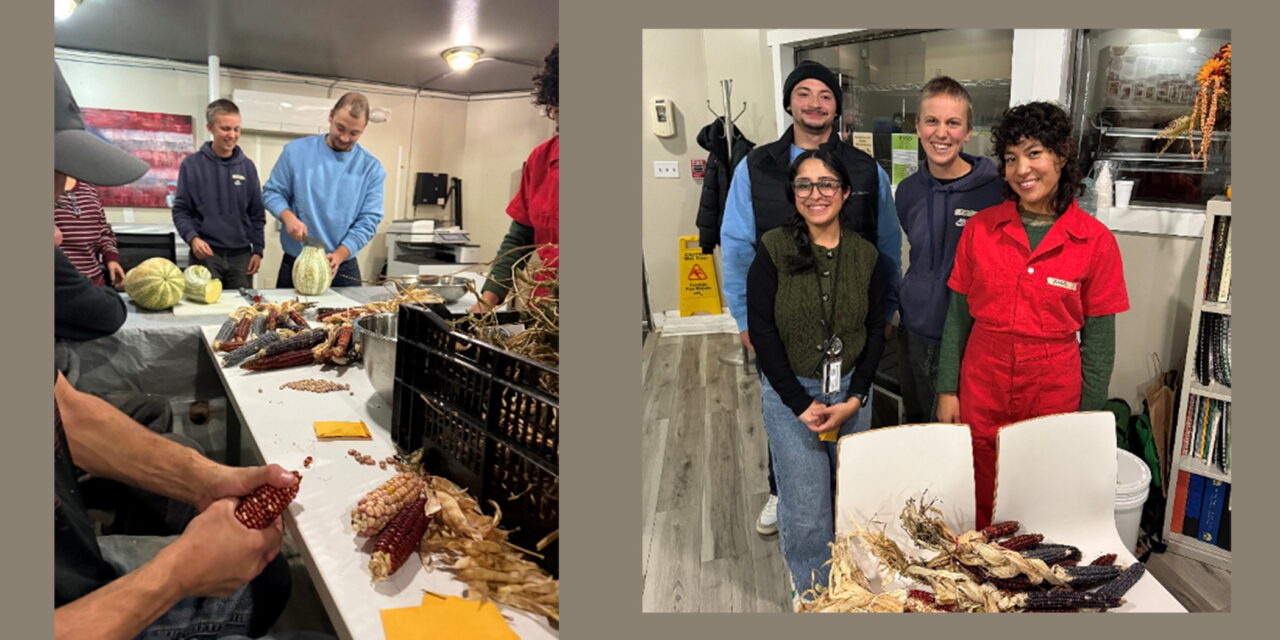
Recently, Phi Theta Kappa (PTK) participated in a Seed Saving Workshop at Nuestras Raíces in Holyoke- “Taller sobre conservación de semillas.” One thing I enjoy about PTK is how every volunteering event teaches us something meaningful while also connecting us to our community and culture. The workshop was led by Rose Cherneff and River Ixchel, who work throughout Western Massachusetts to help people better understand sustainable growing practices and the value of producing food locally.
I learnt that corn is pollinated by wind, which means you need to plant it at least two miles away from other commercial varieties to avoid cross-pollination. I never realized how easily traits can mix across distances. I was reminded of the Milpa traditional Mesoamerican farming method also known as the Three Sisters’, where an intercropping corn, beans, and squash create a diverse and resilient ecosystem. The crops work together synergistically: corn provides a stalk for beans to climb, beans fix nitrogen in the soil for the corn, and squash’s large leaves shade the ground, conserving moisture, and suppressing weeds. This system not only provides a nutritionally complete food source but also enhances soil health and biodiversity.
Our role at the event was to learn and help with seed saving, which involves choosing seeds with good traits and preparing them correctly so they can be viable in the next growing season. Our instructors showed us how to cure and dry seeds, how to recognize when they are ready, and what conditions they need later to grow well. I understood how seed saving connects generational wisdom and preserves cultural traditions vital for food security.
Seed saving strengthens food security by providing locally adapted seeds, protects agrobiodiversity, supports economic independence for small-scale farmers, preserves cultural heritage, improves climate resilience, and upholds seed sovereignty against corporate control. Whether in medicine or within my community, I want to make a positive impact by helping people understand how much power there is in learning, growing, and giving back.