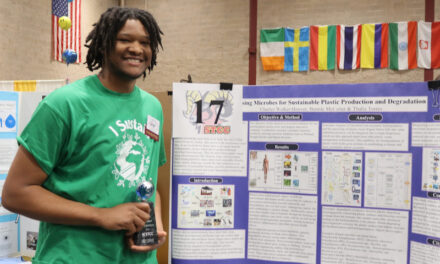
Submitted by Yuying Topor, a PTK student at STCC
My name is Yuying Topor. I major in Health Science and plan to apply for Radiologic Technology program. I am passionate about helping others and making a difference in their well-being. With my medical background, firsthand experience, and strong people skills, I believe I can contribute meaningfully to this profession. That is also the reason that I joined Phi Theta Kappa (PTK). This honor society gives me the chance to grow as a leader, serve my community, and continue learning from others who share the same values.
This year our Honors in Action theme is Sustainability through storytelling, and few stories resonate as deeply as that of Barstow’s Dairy Farm’s anaerobic digestor in Hadley. Their journey of embracing circular-economy principles is an environmental milestone. Today, Barstow Farm stands as a shining example of what it means to care for both the land and the people who depend on it. The anaerobic digester transforms food waste and cow manure into biogas, which is burned in an engine that drives a generator to make clean and renewable electricity!
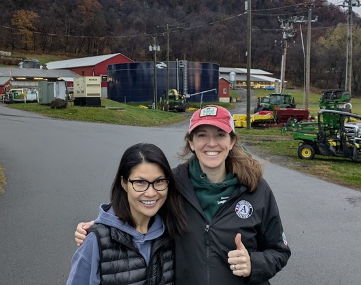
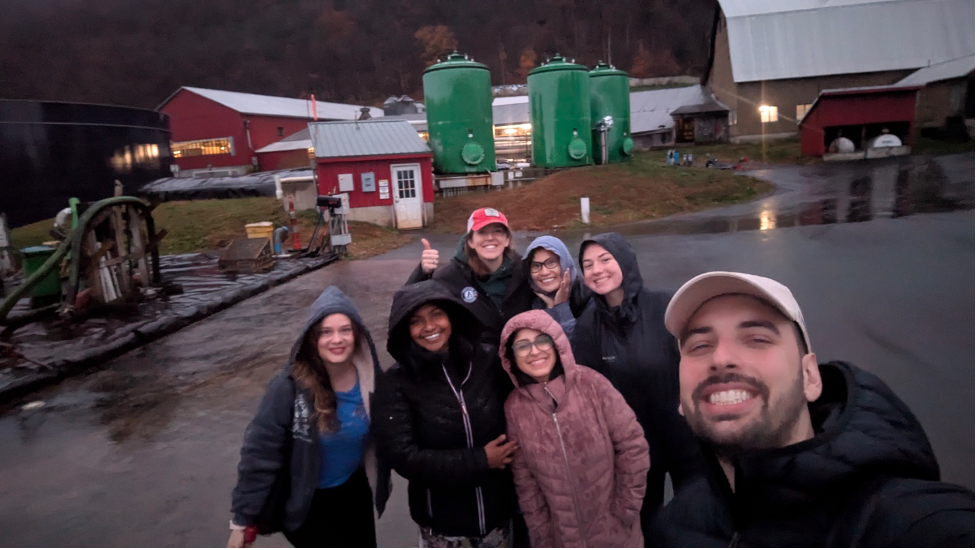
It was a rainy evening, the sun was setting gently behind the mountains, yet it became one of the most inspiring experiences I have ever had. With the soft mooing of the cows in the background we learned that this family-run dairy farm has been thriving since 1806 carrying its legacy of environmental stewardship in its daily operations. We met Denise, one of the 7th-generation members of the Barstow family, I felt the pride and care she has for the farm. She shared that their 600 cows are part of the Cabot Agri-Mark Cooperative, which connects over 500 farm families across New England. Together, they produce butter, yogurt, and cheese that end up on people’s tables.
When milk prices became unpredictable in the early 2000s, the Barstow family decided to innovate instead of giving up. They opened a small bakery and built an anaerobic digester to turn organic waste into clean energy. This system is part of a zero-waste, closed-loop cycle that connects the farm and Cabot in a brilliant way. The farm sends milk to Cabot, and Cabot returns organic by-products from making butter and cheese. The digester then turns the food waste and manure into electricity and heat for the farm and lots of homes. What is left becomes natural fertilizer that helps grow more hay and corn, which feeds the cows, produces more milk, and closes the loop completely. Denise said this process has reduced their need for chemical fertilizers by 90% and helped improve soil health and crop yields.
I learned that in addition, organic waste also comes from local supermarkets, and even McDonald’s, combining it with the farm’s cow manure in a 600,000-gallon anaerobic digester. The digester converts this material into biogas, generating renewable electricity, heat, and nutrient-rich organic fertilizer while capturing 85% of farm greenhouse gases. This system produces 800 kW of power, supplying clean energy to the farm, nearby homes, and the Cabot Creamery butter plant in West Springfield. Further, this innovation supports Massachusetts’ goal to divert food waste from landfills and reduce the state’s waste stream by 80% by 2050.
Denise shared that what they do at the farm is not just about making a profit or attracting visitors, it is about environmental responsibility. Every choice they make, from turning waste into clean energy to protecting the soil and reducing their carbon footprint, reflects this profound principle. I realized that tradition and innovation do not have to be opposite. Instead, they can work together, supported by a powerful sense of community to build a more sustainable future. Sustainability is a way of living with purpose and respect. This trip encouraged me to bring that same sense of care, creativity, and responsibility into my own future career, just like what I saw at Barstow’s Longview Farm.