(Article submitted by STCC student Ahmad Hamad)
I am originally from Syria, and my family has always encouraged me to continue my education and work hard toward my goals despite challenges. I chose STCC because of its affordability and its supportive environment, where I could grow academically and personally while preparing for a future career in healthcare. Being a member of Phi Theta Kappa Honor Society has helped me see myself not only as a student, but also as a leader, scholar, and member of a larger academic community. PTK encouraged me to step outside my comfort zone, take advantage of opportunities such as this, and believe that my voice and my work matter.
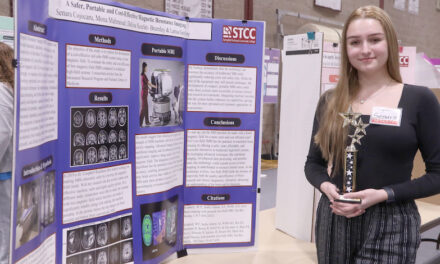
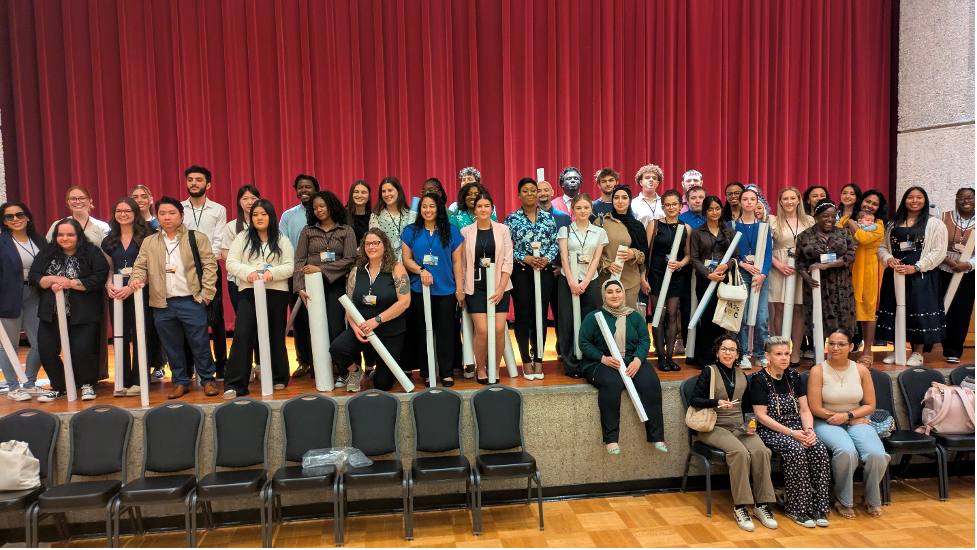
Participating in the 2026 Massachusetts Undergraduate Research Conference at UMass Amherst was a very meaningful and exciting experience for me. I was especially proud to be one of the 44 research poster presenters representing Springfield Technical Community College at the conference. Seeing so many STCC students participate made me feel that I was part of a strong academic community. It showed me that community college students can produce meaningful research, share important ideas, and contribute to larger scientific and academic conversations.
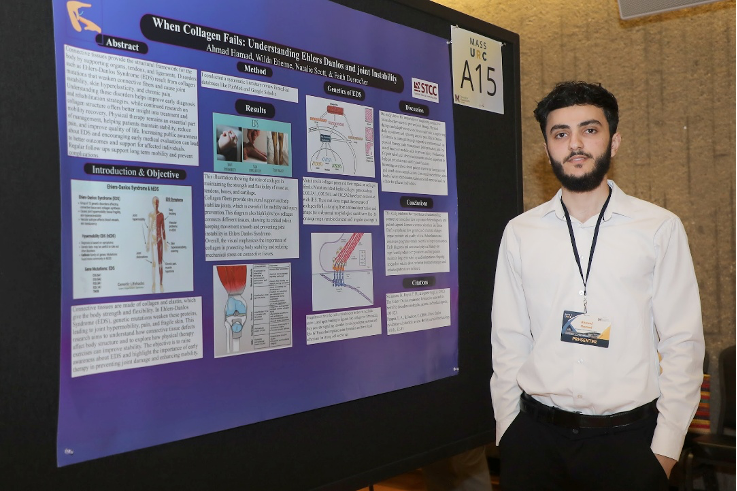
This project began as part of my Human Anatomy and Physiology class, where I had the opportunity to study and present research related to Ehlers-Danlos Syndrome (EDS), connective tissue disorders, and the role of physical therapy in improving joint stability, mobility, and overall quality of life for patients. I worked extremely hard to prepare for the conference by studying research papers, organizing the information carefully, preparing my poster, and practicing my presentation so I could explain my research clearly and confidently. It was my first time presenting research in a large academic setting, so at first, I felt nervous, but the experience became extremely rewarding and helped me gain more confidence in my abilities.
Another inspiring part of the day was the keynote address, “The Power of Scientific Thinking,” that focused on how scientific thinking extends beyond the classroom and helps students navigate challenges, uncertainty, setbacks, and growth. This message connected with me because my own journey has required patience, resilience, and the courage to keep moving forward.
The experience also showed me how research can directly connect to helping people in real life. As someone interested in pursuing a career in physical therapy, I was inspired to continue learning about the human body, movement, rehabilitation, and ways to improve patients’ lives through evidence-based care. Presenting my work helped me understand that research is not only about information; it is about using knowledge to make a difference. I am very thankful for the opportunity to participate and represent STCC. It was an experience that I will always remember, and one that encouraged me to continue growing academically and professionally.