A Phi Theta Kappa Community Service Activity
By Lily Goodchild, STCC student
Hello, my name is Lily Goodchild, and I am currently studying Health Sciences at Springfield Technical Community College. I am working toward majoring in either Sonography or Radiology because I am passionate about assisting people and making a positive difference in their lives. I am currently a provisional member of Phi Theta Kappa (PTK), participating in chapter activities as I learn more about the organization.
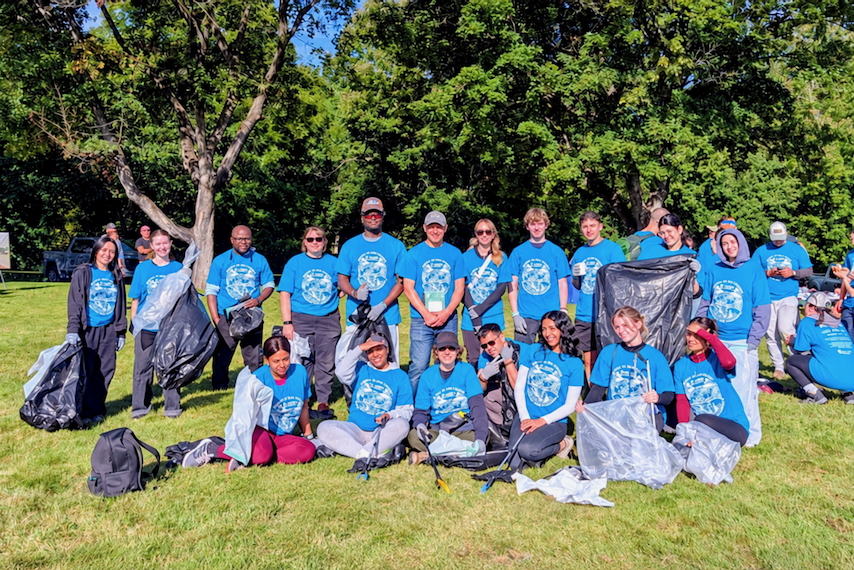
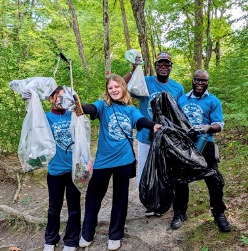
Recently, STCC’s Phi Theta Kappa chapter participated in the annual Source to Sea Cleanup by adopting a cleanup site along the Fort River at Groff Park in Amherst, Massachusetts. I was beyond honored and fulfilled in taking part in this meaningful community service activity alongside fellow students and community volunteers. There is something so beautiful about people coming together as a team to care for the environment. As we cleaned, I could not help thinking about the wildlife that calls this area home. Animals have no say in the pollutants and litter that enter their habitats, so removing trash felt like a direct way to protect them as well as the river.
Around 200 volunteers, including 22 STCC students, participated in the cleanup alongside other members of the community. Together, volunteers removed an incredible amount of litter, including 950 cigarette butts, 864 beverage containers, 714 food wrappers, 396 golf balls, 287 nips, and 115 pounds of scrap metal. Seeing those numbers showed me how quickly hundreds of seemingly small pieces of litter can become a major environmental problem.
Trash does not always stay where it is dropped. Rain and stormwater can carry litter and pollutants from streets, parks, and surrounding land into streams and rivers. Plastics can gradually break into smaller pieces, while chemicals and other contaminants may enter the water and surrounding soil. What begins as one discarded item can therefore affect water quality, wildlife habitat, and the health of an entire ecosystem.
This was more than community service to me; it was a privilege held close to the heart. Every piece of trash I collected, though saddening to find, made me happy to remove. While walking along the trail, I could hear little critters moving through the forest, the beautiful sound of running water against the rocks, insects all around me, children playing on the playground, and cleanup bags crinkling as they filled. These sounds were music to my ears. The experience felt grounding and connected me more deeply to both nature and my community.
I grew up at a time when iPads, iPhones, and electronics were just beginning to make their way into people’s hands. My free time and happiness were rooted in the beautiful green grass, mud pies from my makeshift outdoor kitchen, and gardening with my grandmother. Those experiences taught me to appreciate how much our lives depend on the natural world. A healthy environment is essential for a healthy world. Trees and plants produce oxygen, help improve air quality, stabilize soil, provide habitat, and support countless other organisms. Producers such as plants, consumers such as animals, and decomposers all depend on one another. When one part of an ecosystem is damaged, the effects can move through the food web and influence the health of many other organisms.
This experience also helped me understand the idea of One Health, the connection between human health, animal health, and environmental health. Protecting a river does much more than making a park look cleaner. The health of our water is directly connected to the health of our communities because litter, chemicals, and other pollutants can wash or leach into waterways and groundwater, affecting people, wildlife, plants, and the surrounding environment. Healthy waterways provide habitat, support biodiversity, offer places for recreation, and contribute to healthier communities.
The cleanup showed me that environmental health and human health cannot truly be separated. The water that supports plants and wildlife is part of the same environment that supports us. Caring for a river is therefore also a way of caring for our neighbors and ourselves.
I am truly grateful to have been part of this year’s cleanup, and I hope to participate in many more. Even after I finish school, I want to stay involved in community projects like this.
Small differences add up and come together to create a much bigger difference, slowly but surely. One cigarette butt removed, one bottle picked up, or one student choosing to participate may seem small, but hundreds of those actions can transform a riverbank and inspire others to care.
I hope more students, families, schools, and community members will join future cleanups. When we care for our rivers and natural spaces, we are not simply picking up trash, we are protecting water, wildlife, ecosystems, human health, and the future we all share.