(Submitted by Yaw Anum, an STCC student and PTK president for 2026-2027 school year)
Nourishment! The basic requirement for all life. And yet, it is strange how few of us know how it is produced. We have become too reliant on the commercialization of this basic necessity, often at the cost of damaging our planet. Why is that?
This is a question that Nuestras Raíces’ Spanish for ‘our roots’ is tackling. As a model community farm, it provides local residents with access to land to grow their own sustenance. Farmers grow crops that are central to Puerto Rican cuisine and culture, preserving not only food, but also agricultural knowledge and traditions that can be passed down through generations. This reflects the global One Health approach, which recognizes that the health of people, animals, plants, and ecosystems is deeply interconnected.
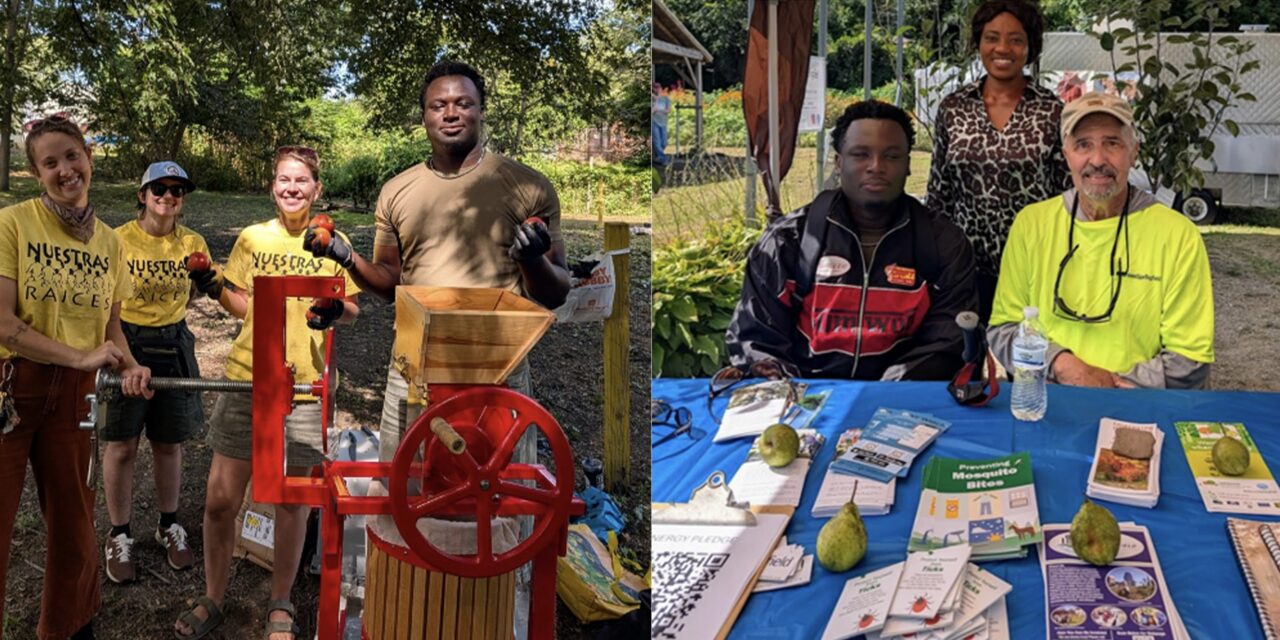
Our Phi Theta Kappa Honor Society members became part of its recent Harvest Festival by volunteering to help make fresh apple cider. We also shared our Energy-Saving Pledge Survey, encouraging festival visitors to think about simple everyday actions that can conserve energy and protect our shared environment.
What a celebration it was! The farm was filled with live music, dancing, vendors, fresh food, colorful produce, and families enjoying the day together. There was even horse riding, adding to the festive atmosphere.
We gathered around the old-fashioned cider press, chopping apples, feeding them through the hopper, and turning the press, quite literally lending our strength to the harvest. It was a lot of fun! As I tasted the sweet cider, I thought about how everything was connected. That connection is at the heart of One Health, the idea that our own health is deeply connected to the health of plants, animals, and the environment around us.
And as I was galavanting through the festival, I was introduced to one of the most fascinating and remarkable people I have ever met, Dr. David Bloniarz, President of ReGreen Springfield. I learned how his advocacy to restore Springfield’s tree canopy following the devastating 2011 tornado connects directly to One Health. Healthy trees do far more than beautify a neighborhood; they cool communities, improve air quality, reduce stormwater runoff, protect soil, provide habitat for wildlife, and support biodiversity. In protecting trees and green spaces, we are also protecting human and environmental health.
By the end of the day, ideas such as soil health, biodiversity, regenerative agriculture, food security, urban forestry, ecosystem services, and One Health no longer felt like scientific terms from a textbook. I could see their connection in the soil, the fresh produce, the trees, the cider we pressed, and most importantly, in people working together to care for their community and environment. That, to me, is science at its most powerful.
I left wishing every corner of the world had its own Nuestras Raíces, and remarkable humans like David Bloniarz who turn knowledge into action. I realized that the health of people, plants, animals, and our environment are not separate after all. They grow from the same roots!