(Submitted by STCC student Innocent Miranga)
Imagine living in a refugee camp, where life is only about survival. Imagine carrying a dream in your heart with no hope. My reality changed when I came to STCC. I was welcomed into a new country, adapted to a new culture, and became the first person in my family to graduate from college!
Friends, this is my story.
Hello, my name is Innocent Miranga, and I am an international student at STCC and a proud member of Phi Theta Kappa Honor Society. I was born in the Democratic Republic of the Congo and spent 24 years of my life in a refugee camp. Because of poverty and the endless challenges of refugee life, I did not have the opportunity to earn a diploma when I was younger. But even through those difficult years, I never gave up on my dream of becoming a computer engineer.
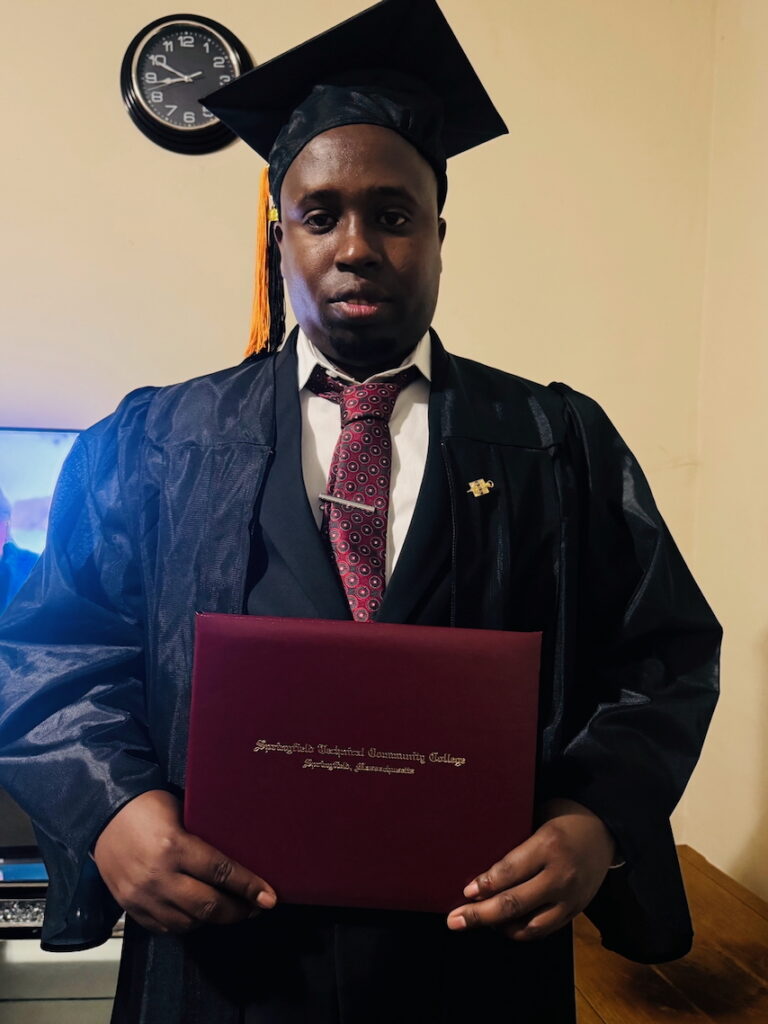
STCC gave me the opportunity and support to pursue that dream. I completed my Associate Degree in Computer Engineering Technology and am transferring to Elms College to study Computer Information Technology and Cybersecurity. Becoming a PTK member changed my educational experience because it helped me see myself not only as a student, but as a leader. I became more connected to campus life, more confident in my abilities, and more motivated to continue my education.
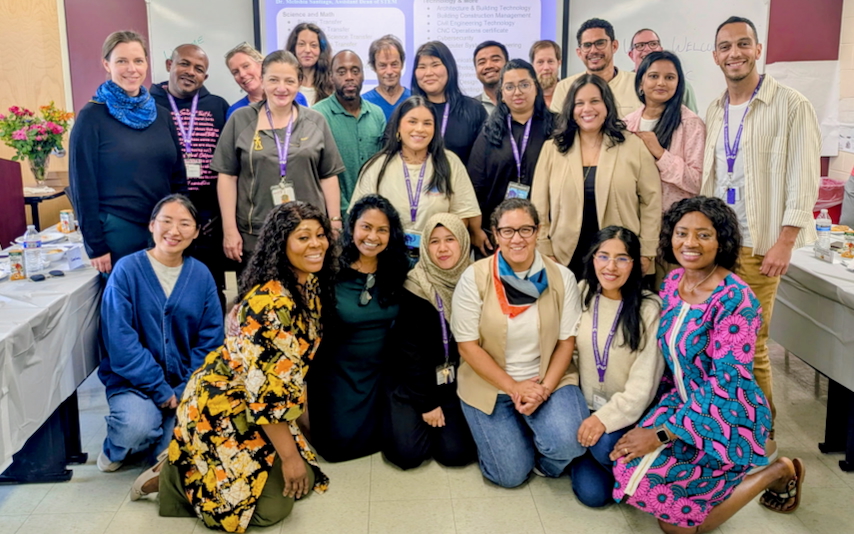
Through PTK, I helped host the Study of the U.S. Institutes, also known as SUSI, a U.S. Department of State program that brings international educators to learn about American education and culture. This was the fifth year that STCC hosted SUSI delegates, continuing a meaningful tradition of global learning and exchange on our campus. As part of their visit, 15 international delegates came to STCC to learn about the American community college system and best practices in teaching. STCC administrators and faculty shared their experiences, teaching strategies, and commitment to student success, showing how community colleges support students from many different backgrounds.
This event made me reflect on how far I have come, how much education has changed my life, and how important community colleges are for students like me. I realized that education is not limited by borders. A classroom in one country may look different from a classroom in another country, but the purpose is often the same: to help students believe in themselves, build skills, overcome challenges, and create a better future.
What inspired me most was the delegates’ deep commitment to their students. Many were interested in student-centered learning, active learning, project-based learning, technology, cultural understanding, and critical thinking. They were not only asking how teachers teach. They were asking how students learn, how students grow, and how students overcome barriers.
The discussion about artificial intelligence also stood out to me. I learned that AI can be a useful tool in education when it is used responsibly. It can help students explore ideas, verify information, and strengthen learning, but it should never replace honesty, effort, or critical thinking. As I prepare for a career in technology and cybersecurity, I want to use technology wisely and ethically to serve people.
This also connects to the larger idea of UN One Health: the understanding that human well-being, education, community, environment, and global cooperation are all connected. Bringing international educators together at STCC showed me that healthier communities begin when people share knowledge, respect different experiences, and work together to help students rise. My story is still being written. But STCC and Phi Theta Kappa have helped me write an important chapter one filled with opportunity, resilience, global learning, leadership, and hope.