By Melanie Thibodeau, Phi Theta Kappa member, Springfield Technical Community College
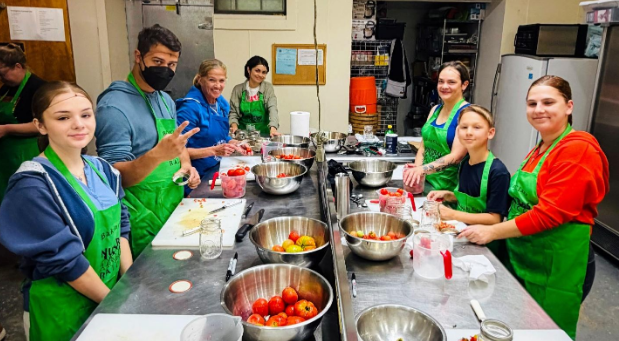
As part of a Phi Theta Kappa community engagement activity, I joined fellow STCC PTK members for a tomato canning workshop hosted by Nuestras Raíces in Holyoke. It promotes urban agriculture, food access, and community empowerment while working toward a healthier, and sustainable future. As a Phi Theta Kappa (PTK) officer, I value opportunities that allow us to serve, learn, and connect with our community while exploring how local actions can contribute to larger issues such as food security, sustainability, and One Health.
All of the tomatoes we used were grown and sourced from the Nuestras Raíces farm, making this experience a true farm-to-table and farm-to-jar lesson. Anna, a certified chef, guided us through each stage while emphasizing food safety. We washed our hands, inspected the tomatoes, prepared them for blanching, and cooled them in ice water. We cleaned and sanitized our work areas as we went. These steps reminded us that safe food preservation begins with careful handling and reducing the risk of microbial contamination.
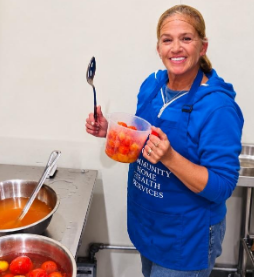
Next, we added lemon juice to the jars, filled them to the proper level, removed trapped air, sealed the jars, and processed them in boiling water. We learned that tomatoes could vary in acidity, which is why tested home-canning methods call for proper acidification before boiling-water processing. Following tested recipes, using the correct amount of acid, maintaining appropriate processing times, and handling jars correctly are all essential parts of safe preservation. The hands-on lesson showed me that canning is not simply a traditional skill, it is applied science. Such community workshops also give people practical skills that can be shared with families and neighbors.
But the workshop was much more than tomatoes.
Food preservation can contribute meaningfully to community food security and resilience. Fresh fruits and vegetables are nutritious but highly perishable. Preserving seasonal produce can extend its usable life, reduce food waste, and help households make better use of locally grown food after the harvest season. Moreover, eating locally grown foods can help reduce our dietary carbon footprint by shortening transportation distances, supporting seasonal production, and reducing the energy associated with moving and storing food over long distances.
This experience connects strongly with One Health, the understanding that the health of people, animals, plants, and the environment are interconnected. Healthy soil and sustainable farms support productive crops. Nutritious crops support human health. Safe food-preservation practices help protect people from foodborne illness, while reducing food loss allows communities to make better use of the resources, water, energy, and labor invested in growing that food. In this way, something as simple as preserving locally grown tomatoes connects agriculture, nutrition, microbiology, environmental stewardship, and community health.
I asked Anna what she hoped participants would take away from the workshop. Her answer was both technique and a connection to community: getting to know the people beside us as we learned. She also reminded us that food preparation involves trial and error, and that we can always try again. That message stayed with me. While the jars processed, we talked, learned about other free community training opportunities, and even played a game of Sorry! What began as a lesson in preserving tomatoes became a lesson in preserving something equally important: knowledge, relationships, and community resilience.
For me, this experience also reflected what Phi Theta Kappa is about: learning beyond the classroom, serving our communities, developing as leaders, and using knowledge to make a meaningful difference. A jar of tomatoes may seem like a small thing. But behind that jar are farmers, healthy soil, scientific knowledge, food-safety practices, reduced food waste, and neighbors willing to teach one another. When those pieces come together, a simple community workshop can become part of something much larger: a healthier, more knowledgeable, and more resilient community. Thank you, Anna and Nadia, for welcoming us and sharing your knowledge. Through experiences like this, Nuestras Raíces truly lives up to its name “Our Roots” connecting food, culture, science, and community.