
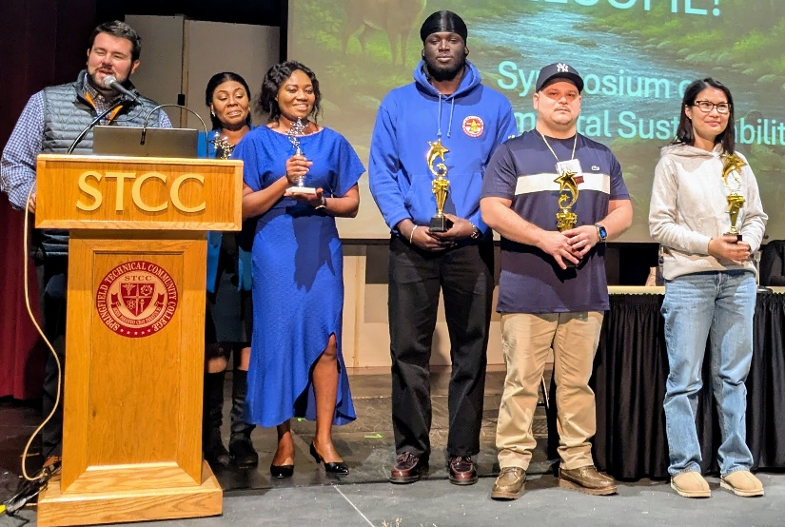
Submitted by Yaw Anum, a Phi Theta Kappa student at STCC
Protecting the earth is protecting ourselves. I was born and raised in Ghana, West Africa, where the natural environment directly met the basic needs of the communities. During my childhood, I participated in daily practices such as collecting water from local sources alongside community members and harvesting fresh produce from surrounding forests with my grandmother. These experiences fostered a close relationship with the land and instilled in me a sense of responsibility as the descendant of a farming family. Preserving my grandmother’s farm was not only a familial obligation but also a means of ensuring that future generations could experience food cultivation as a sustainable and self-sufficient practice.
Upon relocating to Western society, this connection to the natural world gradually diminished. Industrialized systems of production and consumption obscured the essential role of nature in sustaining human life. However, my engagement with higher education rekindled this awareness, particularly as I became increasingly conscious of the accelerating environmental crisis. Biodiversity loss, habitat destruction, and climate change have placed numerous species on the brink of extinction, signaling broader threats to planetary stability. Despite this, ongoing conservation efforts offer viable pathways for intervention.
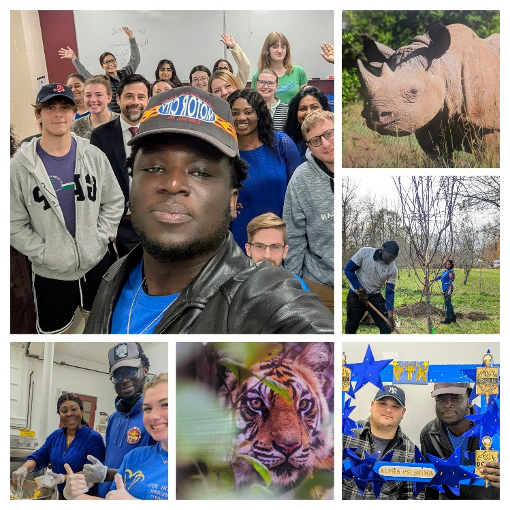
This renewed understanding was further informed by my attendance at a panel hosted by my Phi Theta Kappa chapter of Alpha Psi Sigma Honor Society at Springfield Technical Community College, featuring faculty from the University of Massachusetts Amherst. Through conversations with conservation professionals, I gained insight into the realities faced by individuals dedicated to protecting our environment.
One such conservationist, Theint Thandar Bol, is affiliated with an organization operating in Myanmar that focuses on mitigating threats to big cat populations. The country’s recent descent into civil conflict has intensified competition for land and natural resources, leading to widespread deforestation. In response, Bo and her colleagues collaborate with local rangers to monitor and protect remaining habitats. Tiger populations in these conservation areas have declined to critically low levels, approximately 20 individuals in one site and 8 in another. At the same time, reproductive rates remain constrained by the species’ solitary social nature. She emphasized that long-term conservation success depends heavily on environmental education, particularly among younger generations and local communities.
As a former student of Dr. Timothy Randhir at the University of Massachusetts Amherst, Bol has advanced into a leadership role within a predominantly male conservation field. Despite facing occupational and personal safety challenges, she continues to apply scientific methodologies to conservation efforts. Her work incorporates algorithms and predictive modeling to analyze ecological patterns and forecast future environmental outcomes, making contributions indispensable to her organization. During our discussion, she stated, “People cannot engage in conservation when their immediate livelihood is at risk.”
These discussions prompted reflection on environmental challenges across the African continent, particularly the exploitation of land and resources in Ghana and the escalating conflict between farmers and herders in Nigeria. When I was in Ghana in the summer of 2024, I observed a noticeable decline in environmental quality. Illegal mining activities have expanded significantly, resulting in deforestation and severe water pollution. Rivers and freshwater bodies that once served as reliable sources of drinking water had become contaminated by mining waste, leaving surrounding communities without access to clean water. Climate change has accelerated soil degradation across West Africa as the Sahara Desert continues its southward expansion. This environmental stress has forced herders into agricultural regions already strained by declining soil fertility. Competition over diminishing arable land has intensified tensions between herders and farmers, contributing to ongoing violence.
Another of Dr. Timothy Randhir’s former students is Hlelo Mamba, a conservation expert specializing in large fauna in southern Africa. Hlelo explained that the primary threat facing large fauna continues to be poaching in Africa. Historically, the demand for ivory was exceptionally high in countries such as China and other parts of Southeast Asia, where poachers were often paid up to several times their average lifetime income to obtain ivory. Ivory has long been used in traditional medicine and is deeply embedded in cultural practices due to the belief that it possesses healing properties. In recent years, however, poaching has become a less dominant threat in Eswatini due to the implementation of strict government deterrents, including shoot-to-kill policies targeting poachers. As a result, the most significant threat to large fauna has shifted toward environmental degradation and climate change.
Climate change has severely affected water availability, particularly for rhinoceroses. This is especially detrimental due to their physiological characteristics: rhinos retain substantial body heat and therefore require regular access to shade and water to regulate their body temperature effectively. The loss of reliable water sources poses a serious risk to their survival. Hlelo emphasized that educating local populations about these environmental threats remains a challenge. In Eswatini, the royal family manages a protected national park dedicated to Rhinoceros conservation; however, the park administration is viewed unfavorably by surrounding communities. This is due to the limited inclusion of local populations in conservation efforts, as the park prioritizes tourism development and invests most of its revenue in tourist accommodation rather than directly in animal welfare or community support.
In summary, these cases illustrate how environmental degradation intersects social, economic, and political systems. Sustainable environmental management is not merely an ecological imperative but a prerequisite for social stability and human survival. Addressing these challenges requires integrating scientific research, local knowledge, and equitable resource management to restore balance between human societies and the natural world.
However, the reawakening of environmental consciousness through education highlights the critical role that knowledge and scientific inquiry play in addressing contemporary ecological crises. Re-establishing harmony between human societies and natural systems will require integrating traditional ecological knowledge with modern scientific approaches, promoting environmental education, and prioritizing sustainability at both local and global scales. Our planet’s future hinges on the choices we make today: to honor the delicate web of life, to act with responsibility, and to ensure that the generations yet to come inherit a world where both humanity and nature can thrive.