By Remington Keyes, Vice President of Service, Phi Theta Kappa (PTK), Alpha Psi Sigma Chapter, STCC
Hello friends, I went to the Massachusetts Green High-Performance Computing Center (MGHPCC) at Holyoke expecting to see a building filled with computers. I did not expect to leave questioning some of my own assumptions about technology, sustainability, and scientific progress.
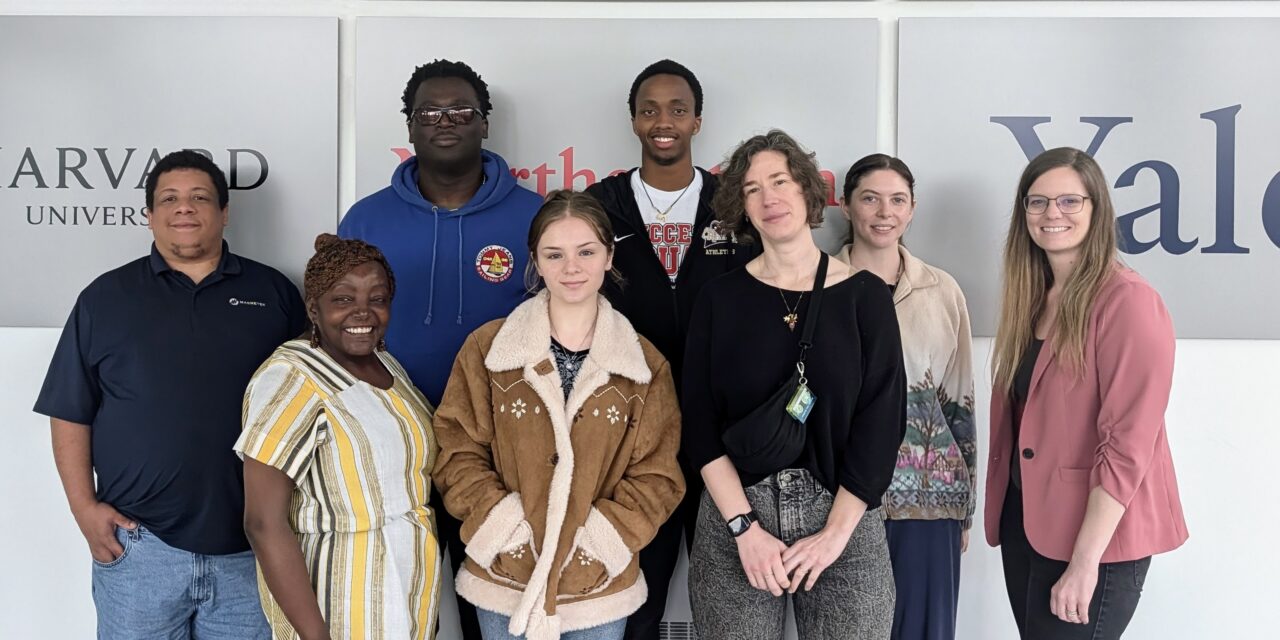
Through our Phi Theta Kappa chapter at STCC, a team of eight students had the opportunity to tour this facility. We were warmly welcomed by Executive Director John Goodhue and Project Manager Melisa Sarnecki. It was raining, but that did not dampen our excitement and curiosity.
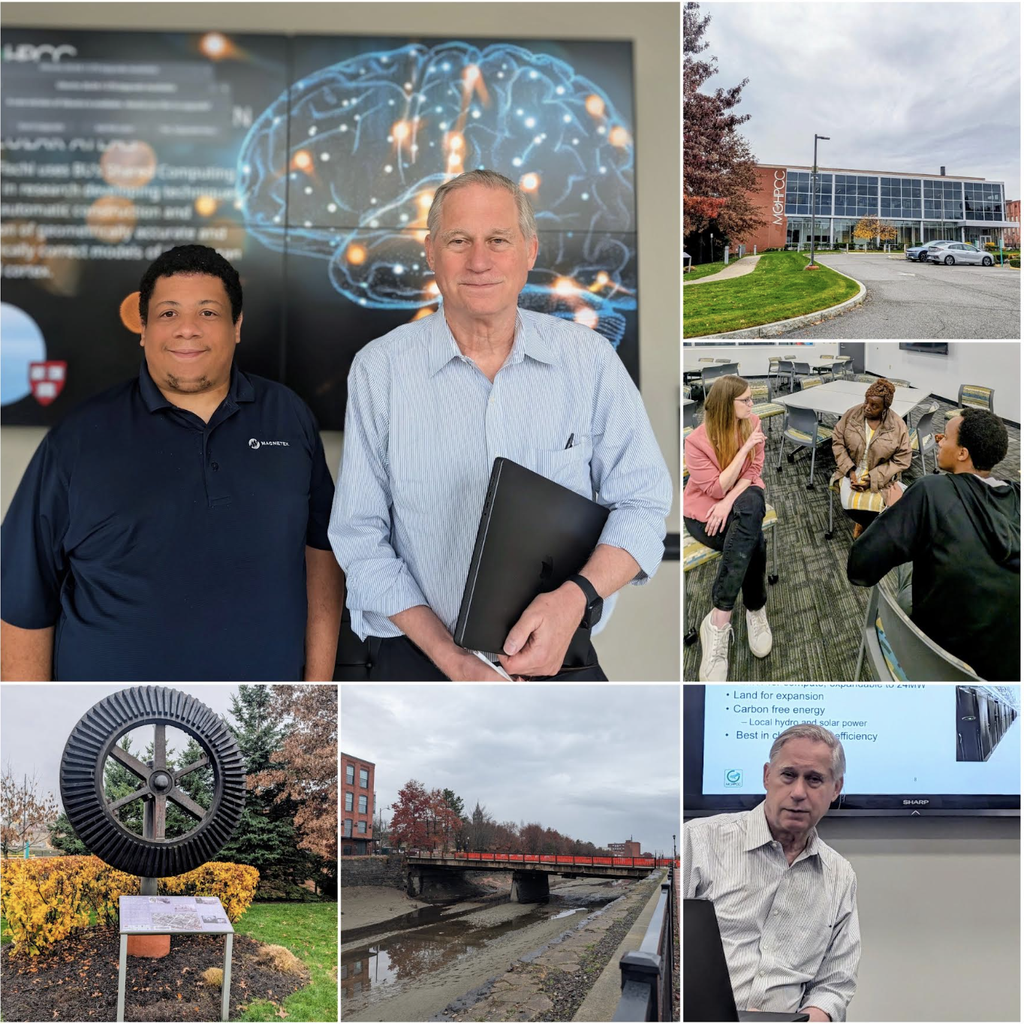
Before we stepped into the server rooms, John gave us a presentation about the research supported by the center. Initially my understanding of data centers came primarily from what I had seen online. Much of the coverage I encountered was from social media and it focused on the negative environmental effects of data centers, particularly their energy and water consumption. I had never visited one before, nor had I learned much about high-performance computers. Naturally, I arrived with questions and some skepticism about the industry’s impact on local communities.
This center is a collaborative initiative involving leading academic institutions. Its founding partners include Boston University, Harvard University, the Massachusetts Institute of Technology (MIT), Northeastern University, and the University of Massachusetts. Yale University joined the consortium in 2024. The center provides powerful computing resources that support research, scientific discovery, and advanced computing projects. John’s presentation showed research ranging from better weather forecasts to fungal diseases threatening wheat crops and materials for sustainable energy. MGHPCC was clearly more than an AI data center. For example, MIT is using computing resources at the center to help accelerate research toward developing clean and economical fusion energy. This was particularly surprising to me because I had not previously considered how much computing power is needed to advance scientific breakthroughs in fields such as energy.
Looking back, I can see a connection to One Health, which recognizes the links between human, animal, and environmental health. Research on crops, weather, and cleaner energy can contribute to healthier communities and ecosystems. I had never thought about supercomputers that way. These facilities are important resources that allow researchers and universities to work toward solving some of the world’s most complicated problems.
The most impressive part of the tour was seeing the actual server rooms. The computing equipment occupied an enormous space, extending across what felt like the entire top floor of the building. Seeing the number of servers operating together gave me a much better understanding of the scale of high-performance computers. Another feature that stood out was the cooling rooms. With so many computers operating simultaneously, managing heat is an essential part of keeping the facility running. The center uses cooling equipment and airflow management to control temperatures. John explained that the facility uses free cooling, allowing it to turn off its chillers for more than 70% of the year. The building has also earned LEED Platinum certification (U.S. Green Building Council’s Leadership in Energy and Environmental Design).
The infrastructure supporting the facility was equally impressive. We learned that its electricity comes from sources including local hydropower and solar energy. Another surprising detail was the center’s network bandwidth, which was described during the tour as reaching approximately two terabits per second. That number helped illustrate just how much information the facility can handle. I had focused on the computers themselves, but the tour showed me that cooling, electricity, networking, and reliability are just as important as the computing equipment.
One of the biggest things I took away from the experience was a different perspective on the relationship between technology and the environment. Data centers use a lot of resources to run, which is something people should be aware of. However, visiting MGHPCC showed me how a facility can use renewable energy and find ways to be more environmentally friendly.
I still think data centers deserve questions about energy and water use. Now I would also ask how efficiently they operate and what research they make possible.
An especially interesting part of the discussion involved the future of cooling technology. As demand for artificial intelligence and advanced computing continues to grow, finding sustainable ways to support that growth will become increasingly important. The technology inside MGHPCC supports work that can have an impact far beyond our small state.
As a STCC student, I believe opportunities like this are an important part of the college experience. Classrooms provide the foundation for learning, but visiting workplaces and facilities allows students to see how knowledge is applied in the real world. The tour also made me interested in exploring potential internship opportunities and gave me a better understanding of the different career paths connected to the technology industry. Even though I did not necessarily arrive expecting to pursue a career in data centers, learning about the opportunities available in this field expanded my perspective.
I would encourage other community college students to take advantage of opportunities like this whenever they become available. You do not have to be an expert in a particular subject to benefit from exploring it.
Ultimately, this experience reminded me that education does not have to happen exclusively inside a classroom. Sometimes, the most meaningful lessons come from visiting a place, seeing something firsthand, and being willing to reconsider what you thought you already knew.
I arrived with questions about the environmental costs of technology. I left with a deeper understanding of its possibilities and new questions worth asking. Sometimes, the greatest value comes from stepping outside your comfort zone, asking questions, and experiencing something you might otherwise never encounter.